




- Research Topics
- Media & Publications
- Global Collaboration

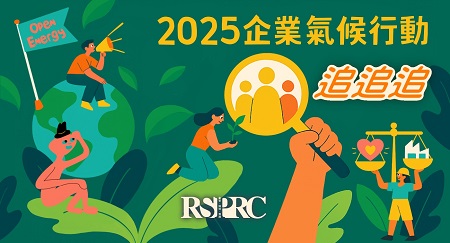
Since 2017, the Risk Society and Policy Research Center at National Taiwan University has continuously monitored Taiwan's top ten greenhouse gas (GHG)-emitting enterprises. Beginning in 2019, the Center has regularly published the "Tracking Corporate Climate Action" feature, tracking emission changes among Taiwan's high-carbon industries and enterprises. As the feature enters its seventh year in 2025, we continue to update data on GHG emissions from major emitters required to conduct inventory and registration, as announced by the Ministry of Environment (for 2023).

Since 2023, the Risk Society and Policy Research Center (RSPRC), National Taiwan University (NTU), has conducted an annual stratified-sample survey examining climate-related financial disclosures among Taiwanese enterprises with annual revenues exceeding NT$100 million.

National Taiwan University's Risk Society and Policy Research Center (RSPRC) has been monitoring Taiwan's top 10 greenhouse gas-emitting companies since 2017. The center published the first edition of the "Corporate Climate Action Tracker" report in 2019 to identify Taiwan's leading industries and corporations by their greenhouse gas emissions.
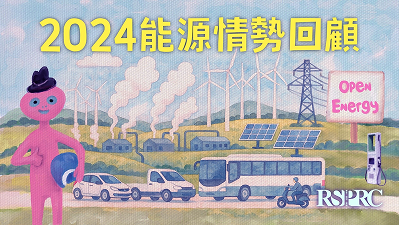
The inauguration of the new government marks the commencement of a novel phase in the net-zero transition of Taiwan. In 2024, following the inauguration of the new administration, the President of Taiwan, Lai Ching-te issued a proclamation marking the occasion of Earth Day. In this address, he unveiled a new initiative to advance a second energy transition, articulating three key tenets: the diversification of green energy sources, the implementation of in-depth energy conservation strategies, and the development of advanced energy storage technologies.

Businesses have an increasing responsibility to address global climate change as risks intensify. Extreme weather events, such as droughts, floods, and hurricanes, pose serious threats to global economic and social stability. Companies, as key drivers of economic activity, are responsible for reducing their carbon footprints, improving energy efficiency, and advancing sustainable development.


Taiwan currently faces daunting challenges amid the evolving global political–economic landscape and the demands posed by low-carbon transition. In 2025, the Risk Society and Policy Research Center at National Taiwan University conducted the Fourth Corporate Sustainability Disclosure Readiness Survey. Building on the Climate-related Financial Disclosures corporate survey framework applied over the past three years, the scope of this latest survey was further expanded to include aspects such as climate disclosure, labor rights, and human rights due diligence, with the aim of examining the sustainability disclosure practices and readiness of companies following the announcement of the carbon fee policies. We hereby invite all stakeholders to review the survey findings and jointly drive Taiwan's progress toward a transition to sustainability that is equitable and resilient.
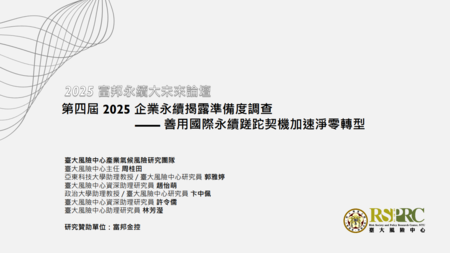
The Risk Society and Policy Research Center (RSPRC) of National Taiwan University (NTU) has been conducting corporate climate-related financial disclosure surveys since 2022, with each successive survey enhancing our understanding of related topics. The fourth round of survey was conducted this year (2025).

The Risk Society and Policy Research Center at National Taiwan University has released a report on the third just transition survey, calling for greater attention to two major challenges: net-zero emissions for workers, young people, and disadvantaged groups and the impact of climate change.

In 2022, the Risk Society and Policy Research Center at National Taiwan University initiated the Corporate Climate-Related Financial Disclosure Survey. With Fubon Financial Holdings' continued sponsorship and support, the scope of the survey was expanded in 2023, and the issue was further explored in 2024. On June 5,...


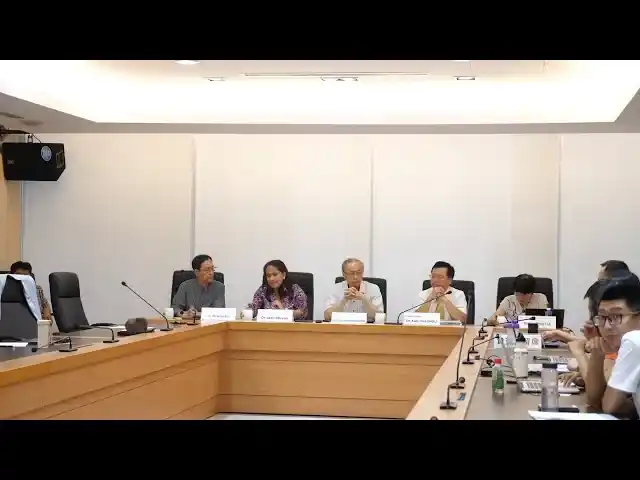
Dr. Winston Tseng, Professor of Research at the Division of Community Health Sciences, School of Public Health, and the Institute of East Asian Studies, University of California, Berkeley, visited the Risk Society and Policy Research Center (RSPRC) at National Taiwan University on June 9, 2026. He was received by the Center Director Kuei-Tien Chou and the members from the research teams for an academic lecture and a follow-up exchange.
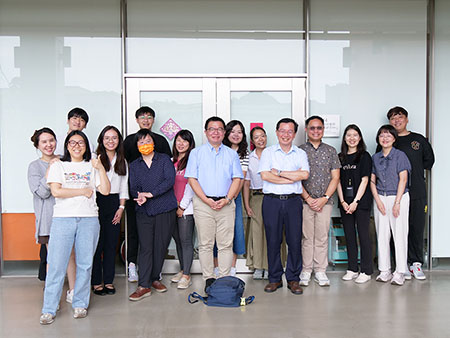
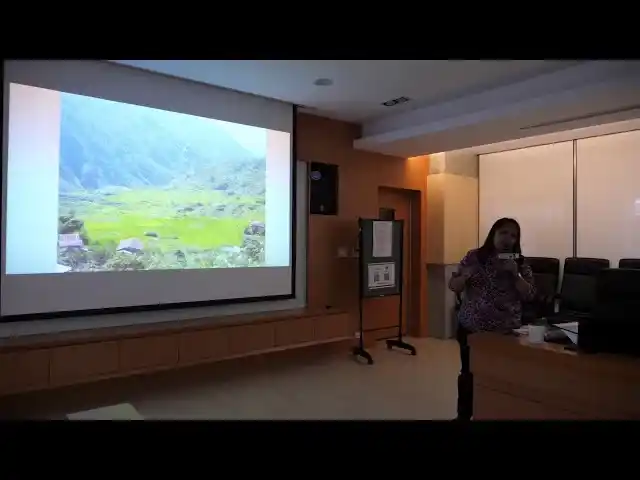
On June 4, 2026, Dr. Laurence L. Delina, Associate Professor in the Division of Environment and Sustainability at the Hong Kong University of Science and Technology (HKUST), visited the Risk Society and Policy Research Center (RSPRC) at National Taiwan University. He was invited to deliver a lecture based on his current research specialty, which was titled “Beyond Net Zero: Inequality, resilience, and the politics of energy transition in the Philippines.”

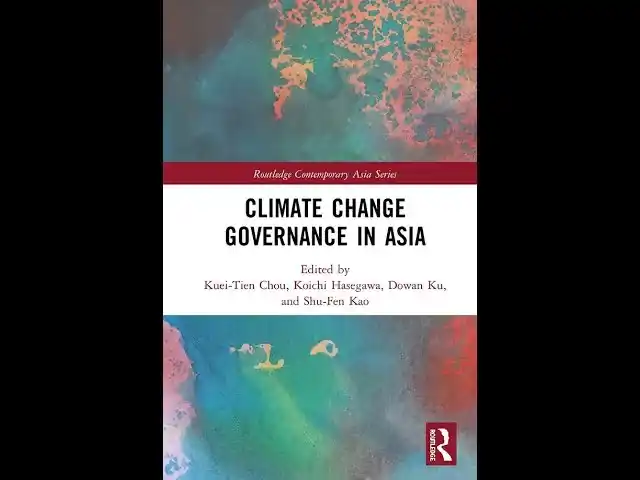
The book launch for the research monograph, Taiwan in Net-Zero Transition: An East Asian Perspective on Developmental Environmentalism (2025), authored by Dr. Kuei-Tien Chou, Director of the Risk Society and Policy Research Center (RSPRC) and Professor at the Graduate Institute of National Development, National Taiwan University (NTU), was held in late October, 2025.

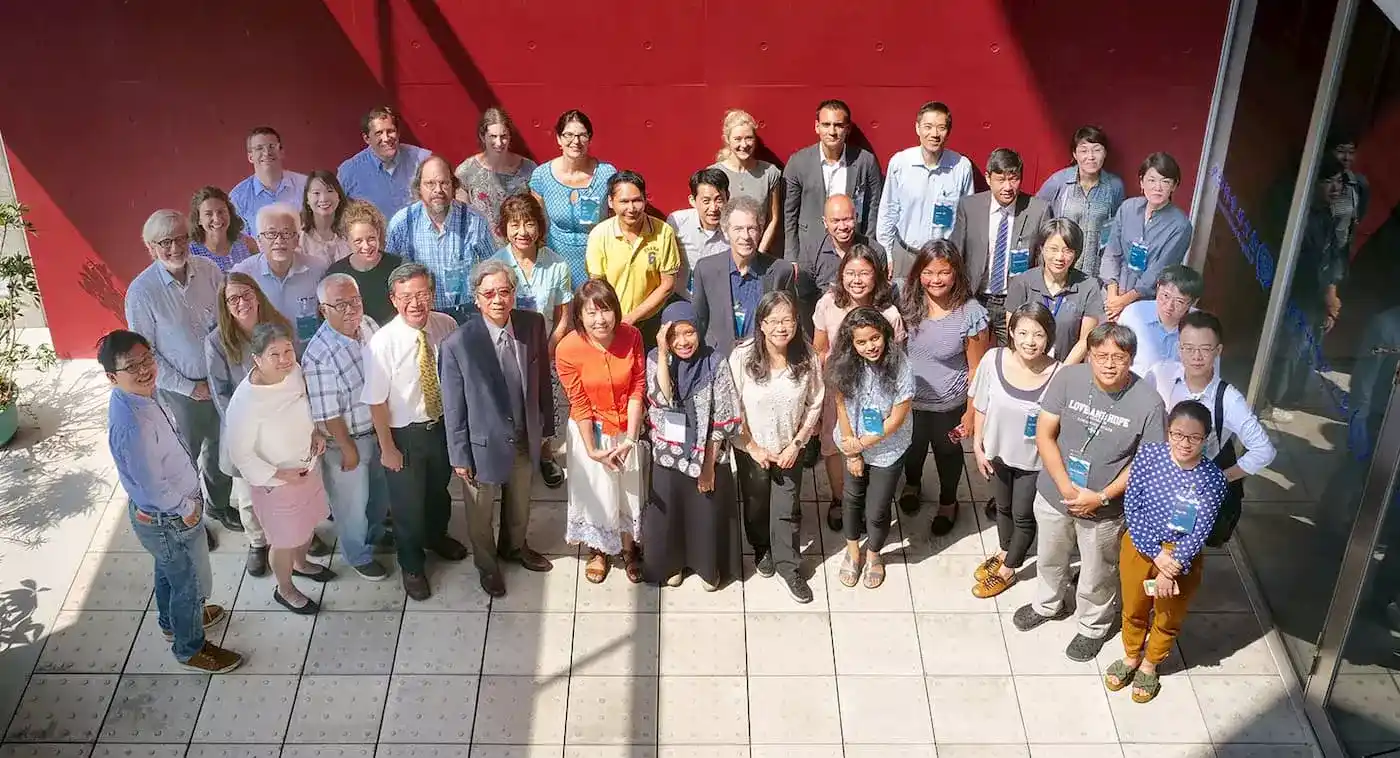
The East Asian environmental sociology network originated from the ISESEA network, co-founded in 2007 by scholars from Japan, Taiwan, South Korea, and other regions. This community organizes a biennial Symposium , with hosting duties rotating among Japan, Taiwan, South Korea, and China. This year (2025) marked the 10th Symposium , with NTU’s RSPRC once again serving as Taiwan’s host institution after previously hosting the event in 2017.
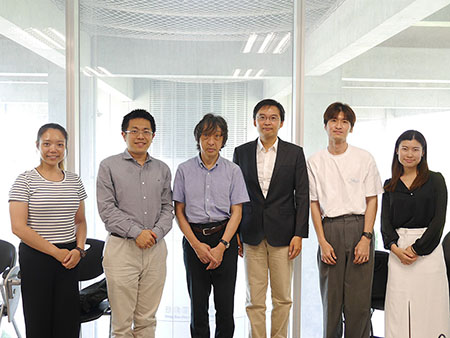
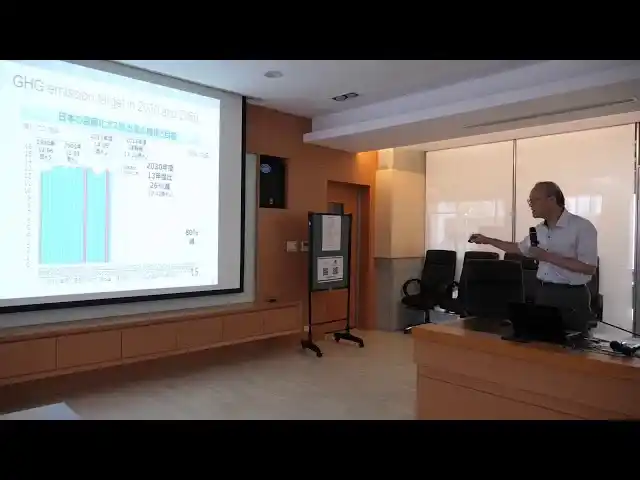
On July 23, 2025, Professor Jusen ASUKA from Tohoku University visited our center and engaged in in-depth discussions with Assistant Professor Jiun-Da LIN from the Graduate Institute of National Development, Assistant Professor Chung-Hsien LEE from the Department of Political Science, and colleagues at the center.

ENERGY

- Open Energy
- Industry and Finance
Since 2017, the Risk Society and Policy Research Center at National Taiwan University has continuously monitored Taiwan's top ten greenhouse gas (GHG)-emitting enterprises. Beginning in 2019, the Center has regularly published the "Tracking Corporate Climate Action" feature, tracking emission changes among Taiwan's high-carbon industries and enterprises. As the feature enters its seventh year in 2025, we continue to update data on GHG emissions from major emitters required to conduct inventory and registration, as announced by the Ministry of Environment (for 2023).
National Taiwan University's Risk Society and Policy Research Center (RSPRC) has been monitoring Taiwan's top 10 greenhouse gas-emitting companies since 2017. The center published the first edition of the "Corporate Climate Action Tracker" report in 2019 to identify Taiwan's leading industries and corporations by their greenhouse gas emissions.
The inauguration of the new government marks the commencement of a novel phase in the net-zero transition of Taiwan. In 2024, following the inauguration of the new administration, the President of Taiwan, Lai Ching-te issued a proclamation marking the occasion of Earth Day. In this address, he unveiled a new initiative to advance a second energy transition, articulating three key tenets: the diversification of green energy sources, the implementation of in-depth energy conservation strategies, and the development of advanced energy storage technologies.

Cities, while occupying only 3% of Earth’s land area, host over half the global population, and generate 80% of global gross domestic product (GDP). However, they also account for two-thirds of global energy consumption and over 70% of annual greenhouse gas emissions. These figures highlight cities’ dominant role in global energy consumption and carbon emissions, revealing that high-density populations and economic activity in cities not only strain limited energy resources but also underscore their critical role and responsibilities in responding to climate change.
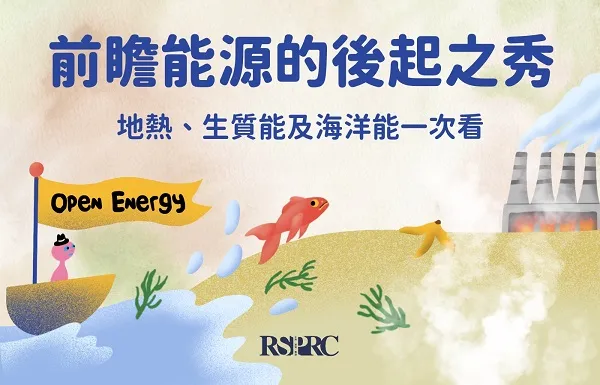
At this year's COP28, the Global Stocktake emphasized the need for all countries to triple their installed capacity for renewable energy by 2030. Therefore, Taiwan must adopt more forward-looking strategies and actions to maximize emission reduction efficiencies.
Since 2023, the Risk Society and Policy Research Center (RSPRC), National Taiwan University (NTU), has conducted an annual stratified-sample survey examining climate-related financial disclosures among Taiwanese enterprises with annual revenues exceeding NT$100 million.
Businesses have an increasing responsibility to address global climate change as risks intensify. Extreme weather events, such as droughts, floods, and hurricanes, pose serious threats to global economic and social stability. Companies, as key drivers of economic activity, are responsible for reducing their carbon footprints, improving energy efficiency, and advancing sustainable development.

In recent years, the assessment of climate risks has had a profound effect on the sustainability of business operations. To address this challenge, the Financial Stability Board (FSB) established the Task Force on Climate-related Financial Disclosures (TCFD) in 2015, which issued relevant guidelines in 2017. However, as climate risk issues have become more complex, the TCFD announced its dissolution in 2023, transferring its oversight responsibilities to the International Financial Reporting Standards (IFRS) Foundation.

Green economy is often reduced to the political wrestling battlefield between developing and developed countries, which also implies a deep epistemic gap between experts and lay people.

Taiwan should promptly promotes environmental tax and the removal of the eco-unfriendly subsidies by the introduction of, such as, energy tax and carbon tax; it is to realize the full internalization of environmental costs, and at the same time reduce the burden of income tax. This economic development policy can achieve the progressive target of ‘a higher growing rate...
.jpg)
In the past five years, the idea of "green economy" has been brewing out of Taiwan's major debates between expanding economic development (e.g., expansion of petrochemical industry in Kaohsiung, finishing the fourth nuclear power plant) and protecting our precious environment. However, this idea has not been well perceived in Taiwan's energy policy agenda because the government believes in the myth of GDP-first development model.


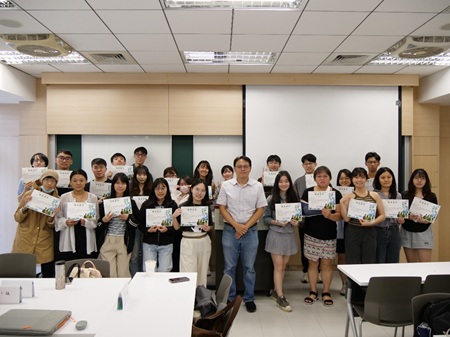
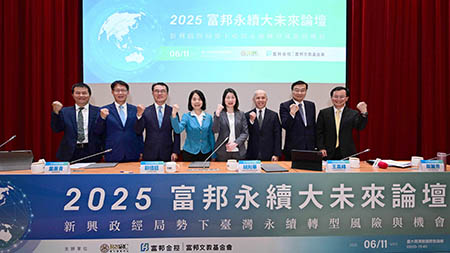
The keynote speaker for this session was Tsutomu Sato, currently serving as Counselor of the Strategy Development and Management Bureau at Japan's Financial Services Agency, as well as Senior Research Fellow at the Nakasone Peace Institute (NPI). With extensive experience in Japan's energy transition and international financial governance frameworks, Mr. Sato delivered a lecture titled "Japan's Green Transformation and Transition Finance." His presentation offered a comprehensive analysis of Japan's practical experience in advancing carbon neutrality, examining the issue from four key dimensions: historical context, policy development, institutional frameworks, and market dynamics.
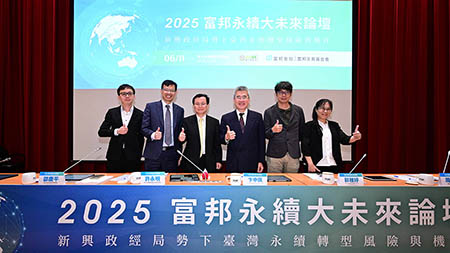
The 2025 Corporate Sustainability Disclosure Readiness Survey, conducted by the NTU RSPRC, was released in this session. The discussion was moderated by Kuei-Tien Chou, Director of the NTU RSPRC; Assistant Professor Ya-Ting Kuo of Asia Eastern University of Science and Technology and Assistant Professor Chung-Pei Pien of National Chengchi University were invited to present their analyses of the survey findings.

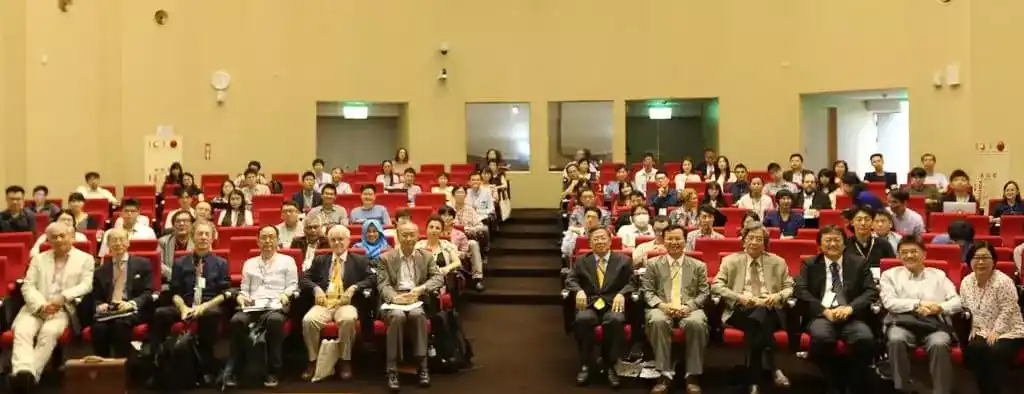
The forum started with a speech by Shien-Quey Kao, Deputy Minister of the National Development Council. She stated that, in addition to presenting NTU RSPRC’s findings on corporate sustainability preparedness, this year’s forum also provided valuable reference for the government in evaluating corporate environmental, social, and governance (ESG) performance and formulating related policies.

The theme of the third session was "European Union (EU) Social Taxonomy and Sustainability Transition", which was moderated by Sue-Ching Jou, Professor of Geography at the National Taiwan University (NTU). The session began with an introduction by Chien-Hung Tung, Deputy Minister of the Interior. The discussants included Chi-Jui Huang, Professor of Finance and Cooperative Management at NTU and Associate Professor Ping-Lung Hsin, Associate Professor of the Graduate Institute of National Development at NTU.
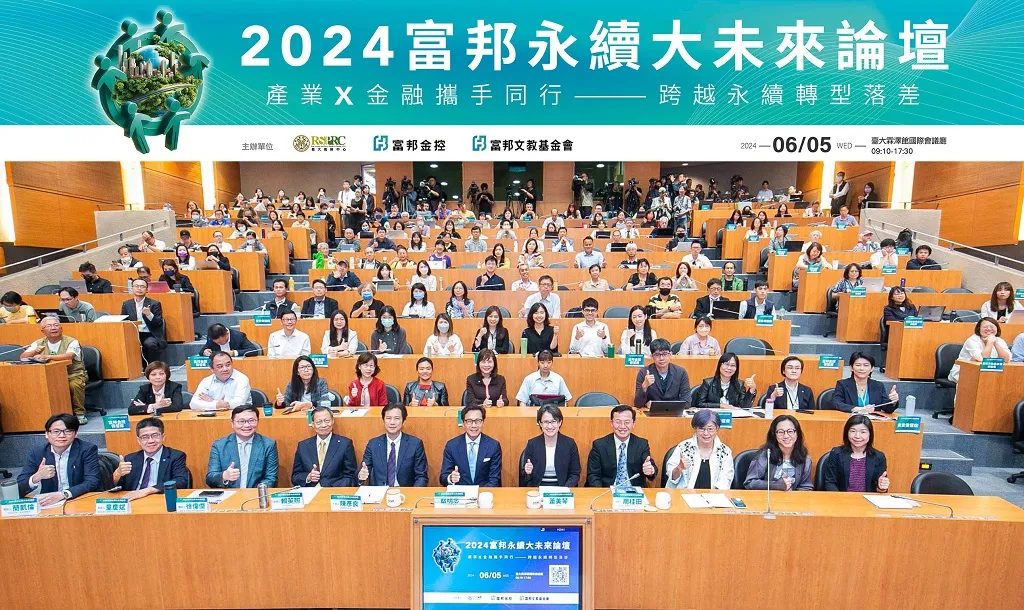
Since 2016, the Fubon Cultural and Educational Foundation has partnered with the Risk Society and Policy Research Center of the National Taiwan University (hereinafter referred to as NTU RSPRC). Through energy transition projects, they have established a model for collaboration between corporate foundations and academic research centers. Last year, the Fubon Group rebranded the "Fubon Globalization Forum" as the "Fubon Forum on Sustainable Future" and worked with NTU RSPRC to promote Taiwan's social consensus on sustainable development and to connect scientific research and advocacy with respect to international issues. This year, with the theme "Collaboration between Industry and Finance: Bridging the Sustainability Transition Gap," the Fubon Forum on Sustainable Future explored the global issues and social impacts experienced by financial institutions and their related enterprises and industries when addressing environmental, social, and governance (ESG) challenges, reflecting the forum's vision for sustainability.