

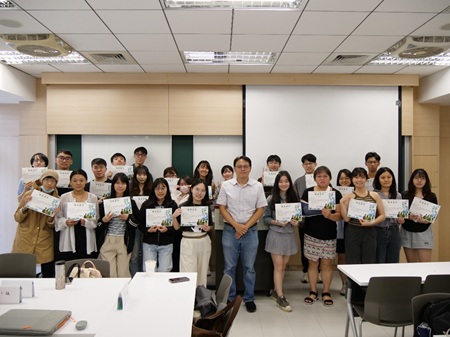



Dr. Winston Tseng, Professor of Research at the Division of Community Health Sciences, School of Public Health, and the Institute of East Asian Studies, University of California, Berkeley, visited the Risk Society and Policy Research Center (RSPRC) at National Taiwan University on June 9, 2026. He was received by the Center Director Kuei-Tien Chou and the members from the research teams for an academic lecture and a follow-up exchange.
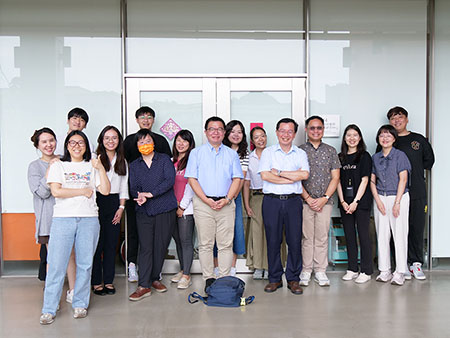
On June 4, 2026, Dr. Laurence L. Delina, Associate Professor in the Division of Environment and Sustainability at the Hong Kong University of Science and Technology (HKUST), visited the Risk Society and Policy Research Center (RSPRC) at National Taiwan University. He was invited to deliver a lecture based on his current research specialty, which was titled “Beyond Net Zero: Inequality, resilience, and the politics of energy transition in the Philippines.”
Taiwan will hold its nine-in-one local elections in the second half of this year. At a time when the restructuring of global industrial supply chains is reshaping Taiwan's internal regional balance and generating increasingly complex challenges in climate and energy governance, local governments and county and municipal leadership candidates alike will face the growing demands of net-zero carbon governance.

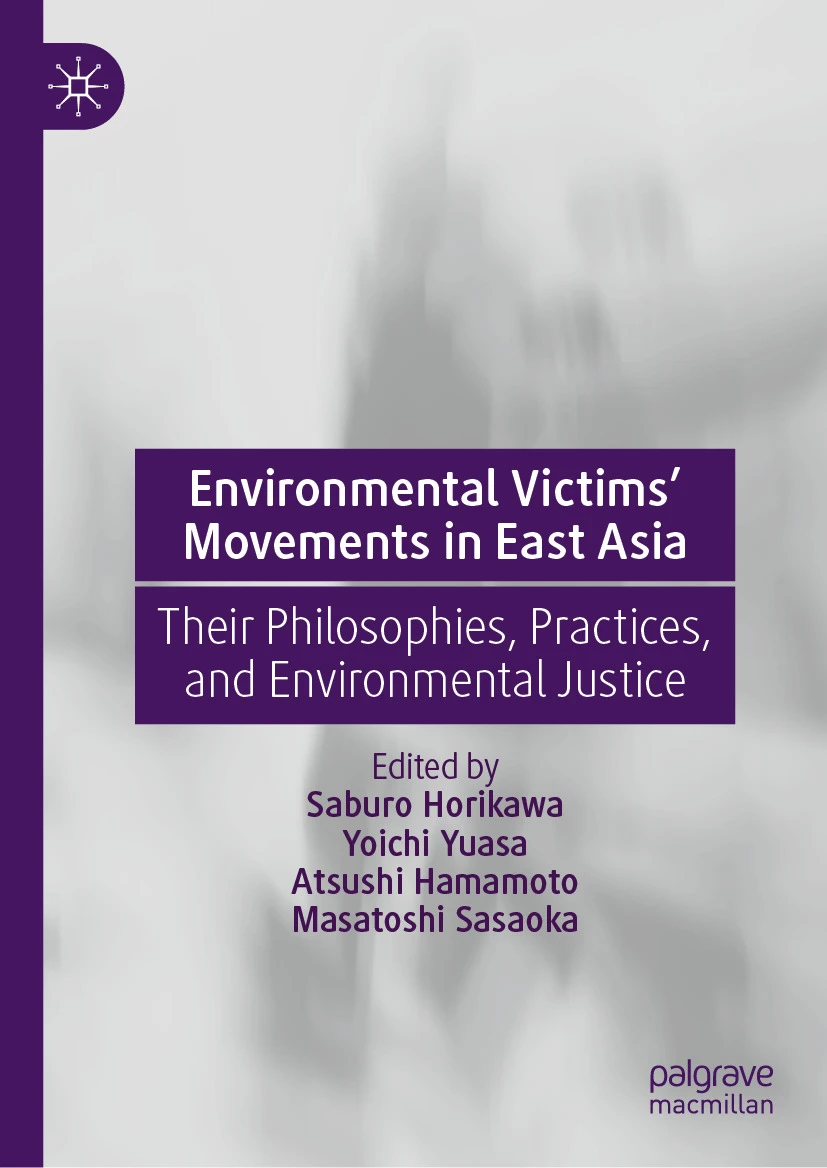
Editors
Saburo Horikawa, Yoichi Yuasa, Atsushi Hamamoto, Masatoshi Sasaoka
Authors(ordered sequentially by chapter)
Saburo Horikawa, Yoichi Yuasa, Atsushi Hamamoto, Masatoshi Sasaoka, Yuuki Tomozawa, Lee Sang-Hun, Chou Kuei-Tien, Chang Jui-Ning, Zhang Yulin, Ryoichi Terada, Paul Jobin, Catherine Mei Ling Wong
Overview:
- Explores the words, ideas, and philosophies belonging to environmental victims' movements in East Asia.
- Investigates the present state of environmental sociology in East Asia.
- Examines how the notion of "environmental justice" in East Asia differs from that of the West.
About this Book:
This book explores environmental victims' movements and how they have shaped the history of East Asia. The book focuses on the impact of these movements and whether the ideas of environmental justice in this region align with Western concepts or whether they take a different approach.
Bringing together leading researchers in the field and using in-depth case studies from Japan, South Korea, Taiwan, and China, the chapters trace the evolution of victims’ movements, uncover their distinctive characteristics, and reveal the forms of environmental sociology they have inspired. Offering fresh insights into the intersection of social activism and environmental change, this volume is essential reading for anyone interested in environmental justice, social movements, and the dynamics of East Asian societies.
In the pursuit of achieving 2050 Net-Zero targets, decarbonization without exacerbating regional development imbalances has become a shared challenge in global climate governance. In early 2025, Taiwan introduced the “Net-Zero Pathway: Taiwan’s Comprehensive Carbon Reduction Action Plan,” identifying “regional equity” as one of the four pillars of a Just Transition. However, translating this principle into actionable policy tools requires a robust, evidence-based foundation.
